sales@yhywiremesh.com
Whatsapp :+86 15027768227



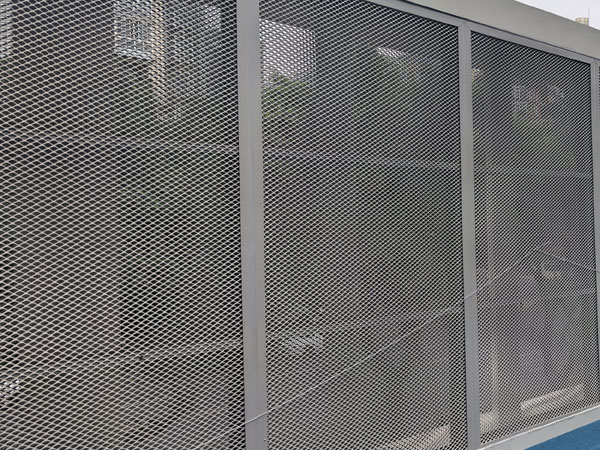
In recent years, some projects have adopted expanded steel mesh (specifically designed for climbing scaffolds) as a protective alternative to the traditional fine-mesh safety netting. Its primary function is to provide a stable, durable protective barrier for the building's exterior scaffolding. Manufactured from galvanized aluminum alloy sheets and processed to create a uniform mesh structure, this product offers ventilation, light transmission, and impact resistance, making it widely used in high-rise construction. Housing and urban-rural development authorities in many regions encourage its adoption; however, like any solution, it has both advantages and disadvantages. Let us briefly discuss the pros and cons of this approach.
First, the advantages:
High safety: Expanded steel mesh for scaffolding boasts high load-bearing capacity, effectively preventing objects and personnel from falling and thereby significantly reducing the risks associated with working at heights.
High practicality: Compared to traditional fine-mesh netting, expanded steel mesh is more durable and resistant to damage, maintaining its protective function over the long term. It is also reusable, which helps lower construction costs.
Aesthetic appeal: The color and appearance of the mesh can be customized to requirements, giving the construction site a neater, more attractive look. Additionally, its high dust-blocking efficiency contributes to environmentally friendly construction practices.
Cost savings: Although the unit price of expanded steel mesh may be higher than that of traditional fine-mesh netting, its reusability can actually reduce overall costs. Furthermore, the relative simplicity of installation and maintenance saves on labor costs.
Noise reduction: The steel mesh helps to some extent to block construction noise from affecting the surrounding environment.
However, expanded steel mesh is not without its limitations; let us now consider the disadvantages:
Higher initial investment: The upfront cost of expanded steel mesh is generally higher than that of traditional fine-mesh netting, which may place financial strain on projects with limited budgets.
Demanding installation requirements: Installing the mesh requires specific professional knowledge and skills; improper installation can compromise its protective effectiveness. Therefore, professional installers are required for the job. Maintenance costs may be relatively high: Although steel mesh panels used for exterior scaffolding are durable, they still require regular maintenance—such as inspections for damage or loosening—to ensure proper performance.
Additionally, in specific environments—such as conditions of extreme heat or cold—thermal expansion and contraction of the steel panels can occur, potentially compromising their protective effectiveness and service life. Furthermore, while these steel mesh panels offer robust physical protection, they can act as conductors during events like thunderstorms, thereby increasing safety risks at the construction site and necessitating additional lightning protection measures. There is also a risk of the mesh panels detaching and falling during high winds if they are not securely fastened or if issues arising from excessive metal fatigue go unaddressed.
 Previous:
What exactly is steel grating?
Previous:
What exactly is steel grating?


Copyright ©
ANPING YING HANG YUAN METAL WIRE MESH CO., LTD. All Rights Reserved | Sitemap Technical Support: