sales@yhywiremesh.com
Whatsapp :+86 15027768227



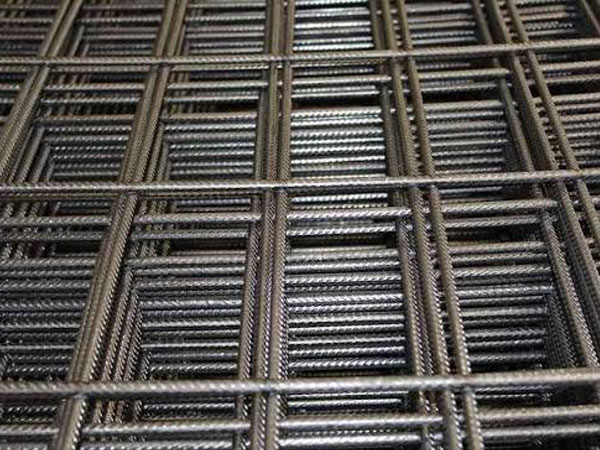
Welded steel mesh—also known as steel reinforcement mesh—consists of longitudinal and transverse steel bars arranged at specific intervals and at right angles, with all intersection points welded together. The mesh is produced using specialized GWC (Grid Welded Construction) mesh welding machines, with the entire process controlled automatically by a computer. This ensures uniform mesh openings and high-quality welds, while the mechanical properties of the steel bars remain virtually unchanged during the welding process. These meshes are manufactured using materials such as CRB550 cold-rolled ribbed steel bars, HRB400 hot-rolled ribbed steel bars, or CPB550 cold-drawn plain steel bars. Depending on the raw materials, they are categorized as cold-rolled ribbed, cold-drawn plain, or hot-rolled ribbed steel mesh. Furthermore, based on factors like steel grade, diameter, length, and spacing, they can be classified as either standard (fixed-specification) or custom-made mesh. The use of this material significantly improves the quality of reinforced concrete projects, accelerates construction, enhances crack resistance, and offers superior overall economic benefits.
1. Project Quality:
Produced on fully automated, intelligent production lines under strict factory quality control, the mesh features precise dimensions, consistent steel specifications, and robust, secure weld joints. The resulting mesh offers high rigidity, excellent elasticity, uniform and accurate spacing, and high-strength weld points—all of which contribute to a substantial improvement in overall project quality.
2. Seismic and Crack Resistance:
Welded steel mesh creates a grid-like structure that bonds effectively with concrete, ensuring uniform stress distribution. This significantly enhances the seismic performance and crack resistance of reinforced concrete structures. Practical testing has shown that using welded steel mesh can reduce cracking by more than 75% compared to traditional manual reinforcement methods. Currently, the design strength for standard steel bars is 210 N/mm², whereas the design strength for welded steel mesh is 360 N/mm². Based on the principle of equivalent-strength replacement, the use of welded steel mesh can reduce total steel consumption by over 30%. Once delivered to the construction site, the mesh is ready for immediate use, minimizing material loss. 3. Accelerating construction progress: The use of welded steel mesh can speed up construction. Once the welded mesh is laid according to specifications, concrete can be poured immediately, eliminating the need for additional steps such as cutting, layered pouring, or manual rebar tying. This can save 50%–70% of labor time, significantly accelerating construction progress and shortening the overall project duration.
4. Welded steel mesh represents a new type of reinforcement, making it particularly well-suited for large-scale concrete projects. The widespread and rapid adoption of cold-drawn ribbed steel bars and hot-rolled Grade III steel bars in China has provided a solid material foundation for the development of welded steel mesh.
 Next:
None


Copyright ©
ANPING YING HANG YUAN METAL WIRE MESH CO., LTD. All Rights Reserved | Sitemap Technical Support: