[email protected]
Whatsapp :+86 15027768227



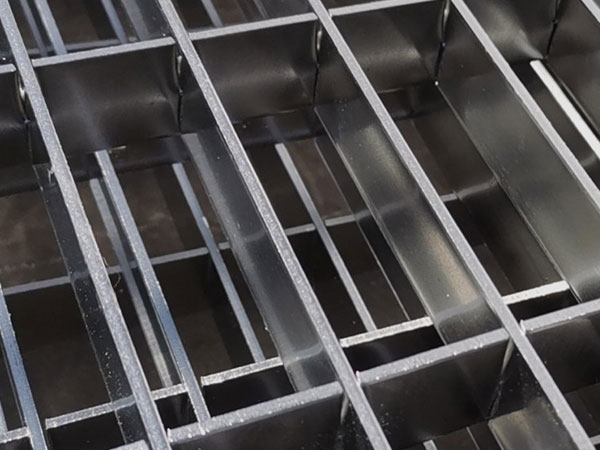
Introduction to Hot-Dip Galvanizing Treatment of Steel Grating: Hot-dip galvanizing is a commonly used, economical, and practical treatment method. After hot-dip galvanizing, a thick layer of alloy zinc, up to 80µm thick, is formed on the steel grating, adhering tightly to the flat steel raw material. Without damaging the zinc layer, the static service life of hot-dip galvanized steel grating can reach over thirty years. After manufacturing, hot-dip galvanized steel grating has a bright silver surface color. After a period of oxidation, the surface color turns dark gray. Unless subjected to violent damage, the zinc layer of the hot-dip galvanized steel grating will not be damaged, which is one of the simplest ways to distinguish hot-dip galvanized steel grating.
Introduction to Cold-Dip Galvanizing (Electroplating) Treatment of Steel Grating
Cold-dip galvanized steel grating is produced by immersing the steel grating in a zinc bath containing zinc salts after rust removal and polishing. The zinc adheres to the surface of the grating through electrolysis. Because no heat treatment is required during the galvanizing process, it is called cold-dip galvanizing. Generally, the zinc layer on the surface of cold-dip galvanized steel grating is very thin, and it will easily peel off with a slight scratch. It is also prone to rusting in dark and damp places. Although cold-dip galvanized steel grating is slightly cheaper than hot-dip galvanized steel grating, it is not as cost-effective. Cold-dip galvanized steel grating has a pale yellow surface, and the zinc layer will easily peel off with a slight scratch.
Introduction to Painted Steel Grating Treatment
Painted steel grating is generally suitable for applications requiring decorative purposes. Colors can be customized, and it is the cheapest of the three surface treatment methods. Painted steel grating typically uses metallic paint, is sun-resistant, and has a long service life. The production process is as follows: rust removal, application of a rust-preventive primer, and then application of a colored metallic paint. Due to the special properties of paint, it is also very good for use in dry places.
 Next:
None
Next:
None


Copyright ©
ANPING YING HANG YUAN METAL WIRE MESH CO., LTD. All Rights Reserved | Sitemap Technical Support: