sales@yhywiremesh.com
Whatsapp :+86 15027768227



In the metal mesh industry, perforated metal and woven wire mesh are both widely used products. They both have a regularly arranged mesh structure, which often leads to confusion among customers during the purchasing process. In fact, although both perforated metal and woven wire mesh are metal mesh products, they differ significantly in manufacturing processes, product structure, application scenarios, and performance characteristics.
Understanding these differences correctly can help users choose the most suitable product based on different application needs, thereby improving the effectiveness and cost-effectiveness of projects.
What is Perforated Metal?
Perforated metal is a metal mesh product made from metal sheets, with holes of different shapes processed onto the surface of the sheet using specialized stamping equipment. During the production process, the entire metal sheet is stamped by a die to form a uniformly arranged pattern of holes, thus perforated metal has good integrity and structural stability.
Depending on different application requirements, perforated metal can be manufactured from various metal materials, such as low-carbon steel, stainless steel, aluminum plate, and galvanized steel plate. The perforated metal mesh offers high flexibility in terms of hole shapes, commonly including round, square, oblong, and hexagonal holes. Customers can choose different specifications based on ventilation, filtration, decoration, or screening requirements.
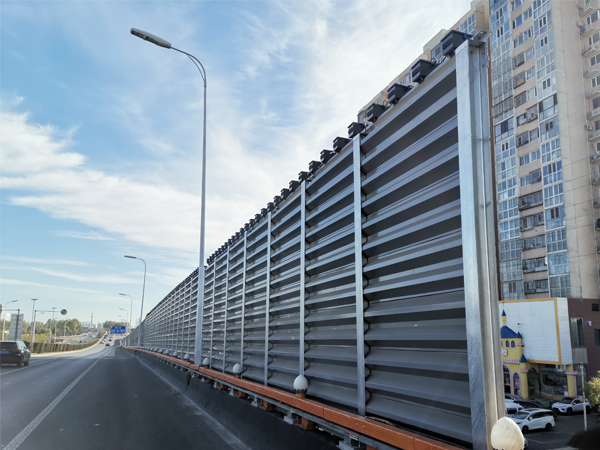
Because perforated metal mesh is made from sheet metal, it has greater rigidity and load-bearing capacity compared to ordinary wire mesh, and is less prone to loosening or deformation. This makes it widely used in building decoration, machinery protection, ventilation and filtration, sound insulation and noise reduction, and industrial screening.
What is Woven Mesh?
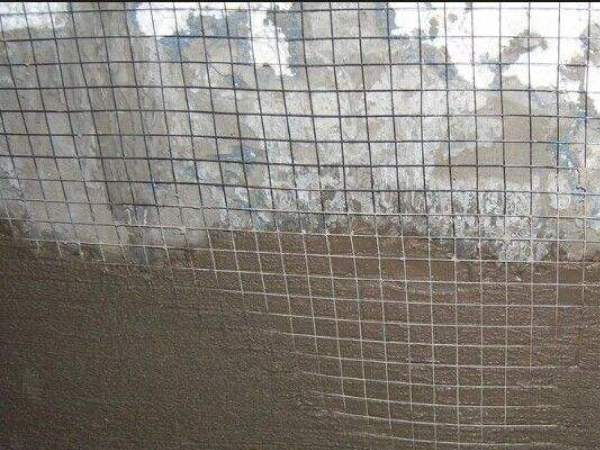
Woven mesh is a mesh product formed by processing metal wires through a weaving process. During production, the metal wires interweave according to a certain pattern, forming a stable mesh structure through different weaving methods.
Common weaving methods include plain weave, twill weave, Dutch weave, and crimped weave. Depending on the material, woven mesh can be made from stainless steel wire, galvanized wire, black iron wire, high carbon steel wire, etc., to meet the needs of different environments.
Unlike perforated metal mesh, woven mesh is not made from a single piece of sheet metal, but rather from the combination of individual metal wires, thus possessing better flexibility and adaptability. Some woven wire mesh can be supplied in rolls, facilitating transportation and on-site installation and cutting.
Because woven wire mesh offers more precise mesh control, it is widely used in screening and filtration. Examples include vibrating screens and sand/gravel screens used in the mining industry, and stainless steel wire mesh used in industrial filtration.
What is the biggest difference between perforated metal mesh and woven wire mesh?
The most obvious difference between perforated metal mesh and woven wire mesh lies in their manufacturing methods. Perforated metal mesh is made by punching holes in a metal sheet, while woven wire mesh is formed by weaving metal wires together to create the mesh structure.
This difference in manufacturing process also leads to differences in their performance.
Perforated metal mesh retains the overall structure of the metal sheet, resulting in higher strength and rigidity, and the ability to withstand greater impact. Simultaneously, its surface is smoother and its appearance is cleaner, making it more suitable for applications requiring both functionality and aesthetics, such as building curtain walls, decorative partitions, and equipment housings.
Woven mesh, made of interwoven metal wires, is more flexible and can be adjusted to suit the installation environment. It also has a higher open area ratio, making it superior in screening, filtration, and ventilation applications. For example, mining screening equipment typically uses high-strength woven mesh because it can withstand continuous vibration and material impact.
Differences in Application Areas
While there is some overlap in practical applications, perforated and woven mesh have different focuses.
Perforated mesh is more commonly used in projects requiring structural strength, aesthetics, and overall performance. Examples include decorative wall panels and interior partitions in the construction industry, protective covers in industrial equipment, and filter plates in ventilation systems. Because perforated mesh can undergo surface treatments such as spraying and galvanizing, it can meet the requirements for corrosion resistance and aesthetics in various environments.
Woven mesh, on the other hand, is more commonly used in screening, filtration, and protection applications. Examples include vibrating screens and stone screens in the mining industry, filter screens in the food processing industry, and protective netting in agriculture and industry. By adjusting the wire diameter and mesh size, woven mesh can achieve different levels of screening precision.
How to Choose the Right Metal Mesh Product?
When choosing between perforated metal mesh and woven metal mesh, it's essential to consider the specific application environment and functional requirements.
If the project prioritizes product strength, rigidity, and aesthetics, such as for architectural decoration, protective isolation, or equipment protection, then perforated metal mesh is generally a more suitable choice.
If the project primarily involves screening, filtration, or requires high permeability, such as in mining screening, industrial filtration, and material classification, then woven metal mesh often offers better performance.
Furthermore, the application environment is also a crucial factor in product selection. For use in humid or highly corrosive environments, stainless steel or corrosion-resistant products can be chosen to extend service life.
Summary
While both perforated metal mesh and woven metal mesh are metal mesh products, they each possess different advantages. Perforated metal mesh, with its high structural strength, good flatness, and diverse aperture options, plays a vital role in architectural decoration and equipment protection; woven metal mesh, with its flexible structure, high-precision mesh openings, and excellent screening and filtration performance, is more widely used in industrial screening, filtration, and protection applications.
As a professional metal mesh manufacturer, we can provide customized perforated and woven mesh solutions based on our customers' different application needs. These solutions include options for materials, specifications, hole types, wire diameters, and surface treatments, helping customers find metal mesh products that better suit their project requirements.


Copyright ©
ANPING YING HANG YUAN METAL WIRE MESH CO., LTD. All Rights Reserved | Sitemap Technical Support: