sales@yhywiremesh.com
Whatsapp :+86 15027768227



Expanded metal mesh is now widely used in our daily lives, offering numerous advantages. It comes in a variety of mesh patterns—including hexagonal, diamond, circular, tortoise-shell (hexagonal-cell), and other specialized shapes—and serves diverse purposes, such as in tractor engine covers or protective window grilles. Let’s explore its key functional features:
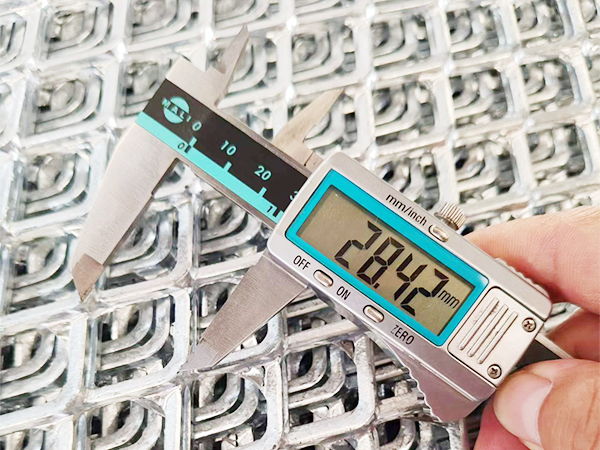
First, expanded metal mesh is created by cutting and stretching high-quality steel plates. It contains no welded joints, resulting in high structural strength and excellent anti-climb properties. Combined with its affordable price, this makes it highly versatile for a wide range of applications.
Second, when used as an anti-glare screen, it offers an aesthetically pleasing, elegant appearance and low wind resistance. A dual-layer coating—galvanization followed by a plastic (polymer) finish—provides superior corrosion resistance, extending the product's service life and significantly reducing maintenance costs. Furthermore, it can be finished in various vibrant colors.
Third, it is easy to install and highly durable. Because of its minimal surface contact area, it does not easily accumulate dust, allowing it to remain clean and tidy for long periods—making it a preferred choice for enhancing the appearance of roadside environments.
Expanded metal mesh is valued for its functional versatility, affordability, and high performance. Its resistance to corrosion and damage, coupled with a long service life, has led to its widespread adoption. As global industrial automation, innovation, and the national economy continue to advance rapidly, the market for expanded metal mesh—both domestically and internationally—shows immense potential. This growth brings new, higher, and more sophisticated demands for the equipment used to manufacture such mesh. As the industry evolves, developments in expanded metal mesh products are trending in the following four areas:
Variety of Expanded Metal Mesh: The range of expanded metal mesh products should be continuously expanded—both horizontally and vertically—to increase the breadth and depth of the product line, building upon and extending existing offerings.
2. Quantity of Expanded Metal Mesh: The volume of expanded metal mesh production should be effectively increased and expanded. This will not only meet the growing demands of domestic manufacturers but also align with global industry trends, facilitating an active increase in export volume.
3. Quality: Product quality must be meticulously refined to create advanced, high-quality offerings. Quality must be stable and reliable, meeting precise technical specifications. Furthermore, the service life and operational stability of tooling, molds, and mesh-manufacturing equipment should be continuously improved.
4. Technical Research and Development: Beyond consolidating and advancing existing research and development efforts—thereby narrowing the gap with world-class equipment—it is essential to study and assimilate international cutting-edge technologies. This should be pursued through a new product development approach that integrates industry, academia, and research.
Additionally, expanded metal mesh has various applications in the construction industry: it is used for plastering (reinforcing cement), protecting mechanical equipment, crafting artisanal goods, and serving as protective grilles for high-end audio equipment. It is also utilized for highway guardrails, stadium fencing, and protective screens for traffic signals. Heavy-duty expanded metal mesh is employed for catwalks, stairways, and walkways on oil tankers, heavy machinery, boilers, oil wells, mines, locomotives, and large-scale vessels (such as 10,000-ton ships). With recent technological advancements, the process is no longer limited to metal sheets; it can now also be applied to paper. Currently, expanded metal mesh is the most suitable type of fencing for use along railways.


Copyright ©
ANPING YING HANG YUAN METAL WIRE MESH CO., LTD. All Rights Reserved | Sitemap Technical Support: